A comprehensive catering quote includes all costs necessary to successfully execute your event. This encompasses not only ingredients and staff, but also transportation, materials, hidden costs such as administration and insurance, plus a healthy profit margin. A well-considered cost calculation ensures that you remain profitable and that customers do not encounter any surprises.
What are the basic costs that should always be included in a catering quote?
Every professional catering quote starts with four fundamental cost items that you must always include. These basic costs form the basis of your pricing and determine whether your assignment will be profitable.
Ingredient costs are your biggest expense. Calculate not only the main courses, but also side dishes, sauces, bread and any special dietary requirements. Don't forget to add a safety margin of 5-10% for waste or last-minute guests.
Personnel costs include more than just the hours worked during the event. Also factor in preparation time, staff transport, tidying up and any overtime. For example, for a buffet for 50 people, you will need at least two people for eight hours of work.
Transport costs are often underestimated. Think about fuel costs, wear and tear on your vehicle, parking fees, and extra trips for forgotten items. Calculate an average of €0.30 per kilometre for all transport costs.
Material costs cover crockery, linen, warming equipment and decoration. Even if you already own these items, you must take into account depreciation, cleaning and possible replacement in case of damage.
How do you calculate the personnel costs for a catering assignment?
You calculate personnel costs by multiplying all the necessary hours by the correct hourly rates. A systematic approach prevents you from underestimating this important cost item.
Start by estimating preparation time. For a hot meal, allow an average of 1 hour of preparation time per 10 guests. A cold buffet requires approximately 30 minutes per 10 guests. Don't forget to factor in time for shopping and loading materials.
You will need to fill various roles during the event. A chef earns an average of €18-25 per hour, while service staff earn €14-18 per hour. For a buffet for 100 guests, you should plan for at least one chef and two service staff.
Clean-up time usually takes 1-2 hours, depending on the size of the event. Add travel time to this, especially for locations outside your normal working area.
| Function | Hourly rate | Hours required (50 guests) | Total costs |
|---|---|---|---|
| Chef | €22 | 8 hours | €176 |
| Service employee | €16 | 6 uur | €96 |
| Dishwasher | €14 | 4 hours | €56 |
What hidden costs are easy to overlook in your quotation?
Hidden costs are the silent killers of your profit margin. These unexpected expenses can quickly turn your attractive quote into a loss-making job if you don't factor them in beforehand.
Administrative costs are often overlooked, but they take up a lot of time. Think of preparing quotations, drawing up contracts, invoicing, and customer communication. Calculate 2-3% of your total quotation amount for this.
Extra travel time is caused by traffic jams, incorrect addresses or locations that are difficult to reach. For events in the city or during rush hour, you should allow for 50% extra travel time. A normal journey of 1 hour will then take 1.5 hours.
Special dietary requirements cost extra time and money. Gluten-free, vegan or halal options often require separate ingredients and preparation methods. Expect to pay an additional £3-5 per person with special requirements.
Insurance is mandatory but often overlooked. You need at least €1-2 million in liability insurance coverage. This costs approximately €300-500 per year for a small catering business.
Last-minute changes occur in 30% of all events. Therefore, always include a flexibility percentage of 5-10% in your quotation.
What is a reasonable profit margin for catering services?
A healthy profit margin for catering services is between 15-25% of your total turnover. This profit margin depends on your specialisation, competition and the added value you offer.
For standard catering such as business lunches, you can expect a profit margin of 15-20%. Competition is fierce, and customers mainly compare prices. Here, it's all about efficiency and volume.
Specialised catering, such as weddings or exclusive events, can yield a profit margin of 20-30%. Customers pay for expertise, creativity and personal service.
Transparency in your pricing builds trust without weakening your competitive position. Break down your costs into clear categories such as food, staff and service, without revealing exact margins.
Your profit margin must also allow room for investment in new equipment, marketing and business growth. Margins that are too low make this impossible and threaten your future.
How do you deal with unforeseen costs during an event?
Unforeseen costs are inevitable in the catering world. A good buffer strategy and clear communication with customers will help you resolve these situations professionally.
Always build a buffer of 10-15% into your quotation for unexpected situations. Call this an "unforeseen costs surcharge" and explain why it is necessary. Honest customers appreciate this transparency.
Communicate proactively with customers about possible additional costs. Set clear limits for changes without additional costs. For example: "Minor changes are free of charge up to 48 hours before the event, after which we charge £25 per change."
Practical examples of unforeseen costs include extra guests who register at the last minute, defective equipment that needs to be replaced, or weather conditions that require additional protection.
Always stay in touch with your customer during the event. If additional costs arise, discuss this immediately and explain why they are necessary. Customers are much more accepting of additional costs if they understand the reason behind them.
Why is a comprehensive cost calculation important for your business?
Accurate cost calculation is the backbone of any successful catering business. It determines not only your profitability, but also your credibility with customers and your opportunities for growth.
Underpricing may seem attractive to attract customers, but it will destroy your business in the long run. You cannot deliver quality, pay staff or invest in improvements if your margins are too low.
You build customer trust by charging realistic prices and honouring agreements. Customers who receive an unrealistically low quote often expect problems during the event.
A complete cost calculation also helps you make strategic decisions. Which events are the most profitable? Where can you become more efficient? These insights are impossible without accurate figures.
Business growth is made possible by healthy margins that provide scope for investment. New equipment, additional staff or marketing cost money that must come from profits.
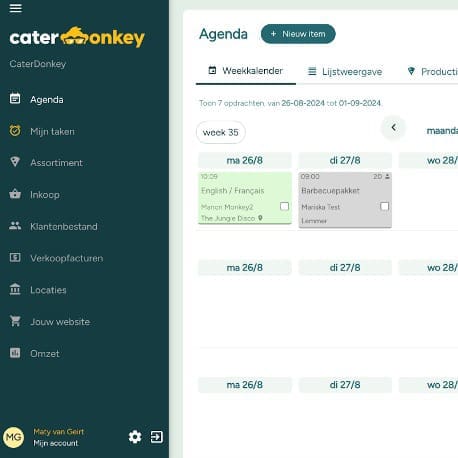
For professional hospitality and catering quotes, software such as Catermonkey is a valuable investment. We help catering professionals systematically map out all cost items, from ingredients to staff planning. With our tools, you can create accurate quotes faster and keep track of all your costs, ensuring that every job is profitable.
Ready to optimise your cost calculation?
Do you have ideas or questions about improving your quotation process? Catermonkey is happy to work with you to determine how our platform can support your business in creating accurate, profitable quotations. Whether you need help with cost management, staff planning or customer communication, together we will find the best solution for your challenges.
Schedule your brainstorming session here! Book a no-obligation brainstorming session today and discover how we can take your catering business to the next level.