A good price calculation for your catering quote starts with mapping out all costs: ingredients, staff, transport, materials and overheads. Add a healthy profit margin of 20-40%, depending on your type of assignment and customer. Don't forget to take into account additional costs such as weekend and evening surcharges, and build in a buffer for unforeseen expenses.
Why is accurate pricing important for your catering quote?
Accurate price calculation forms the basis of your business success. Without proper cost price calculation, you run the risk of carrying out assignments at a loss, which undermines your profitability.
Professional price calculation also gives you a strong competitive position. You can consciously opt for competitive rates for large assignments or, conversely, charge premium prices for exclusive events. You can only achieve this flexibility if you know exactly what your costs are.
In addition, a well-substantiated quotation conveys professionalism to your customers. When you can clearly explain why you charge certain prices, this builds trust. Customers appreciate transparency and are often willing to pay more for clarity.
What costs should you include in your catering price calculation?
A complete cost calculation includes all cost items associated with an assignment. If you forget one, it will immediately reduce your profit.
Ingredient costs are usually the most visible, but they are only part of the picture. Calculate these per person and take seasonal influences and supplier prices into account.
Personnel costs are often the largest expense. Do not only calculate the hours during the event, but also preparation time, travel time and any overtime. Do not forget to include employer's contributions.
| Cost item | What is included | Percentage of total costs |
|---|---|---|
| Ingredients | Food, drinks, garnish | 25-35% |
| Staff | Preparation, service, travel time | 35-45% |
| Transport | Fuel, vehicle costs | 5-10% |
| Materials | Tableware, linen, decoration | 8-12% |
| Overhead | Rent, insurance, administration | 10-15% |
Transport costs include fuel, vehicle wear and tear, and any additional transport hire. Materials include crockery, linen, cooking utensils, and decorations.
Overhead costs such as rent, insurance, telephone and administration are spread across all your assignments. Unforeseen costs also deserve a place in your calculation, for example for last-minute ingredients or extra staff.
How do you calculate the cost price of your catering menu?
The cost calculation per person starts with calculating your ingredient costs. Create a recipe card for each dish with exact quantities and current purchase prices.
First, calculate your net ingredient costs per portion. Add 10-15% for waste and spoilage. This will give you the actual ingredient costs per person.
To calculate the preparation time, work out how many hours your team needs per person. For example, a three-course menu takes 45 minutes of preparation time per person, while a simple lunch takes 15 minutes.
Portion size plays an important role in your cost price calculation. Take the type of event into account: guests eat less at a standing reception than at a full dinner. Adjust your portions accordingly to prevent waste.
What profit margin should you apply for catering assignments?
A healthy profit margin is between 20% and 40% on top of your total costs. The exact amount depends on various factors that you need to assess for each assignment.
For standard assignments with known clients, a profit margin of 20-25% is often sufficient. For complex events involving high risks or new clients, 30-40% is more appropriate.
Seasonality and demand affect your margins. During busy periods, you can charge higher margins, while during quieter times you may have to settle for lower margins in order to secure orders.
The size of the assignment also plays a role. Large events often offer economies of scale, allowing you to achieve a good result even with a lower margin. Small, laborious assignments, on the other hand, justify a higher margin.
How do you deal with additional costs and surcharges in your quotation?
Extra diensten en toeslagen communiceer je transparant en vooraf naar je klanten. Dit voorkomt discussies achteraf en zorgt voor duidelijke verwachtingen.
Weekend and evening allowances are common in the hospitality industry. For weekend work, calculate a 25-50% allowance on your personnel costs, depending on your collective labour agreement and local customs.
Last-minute changes cost extra time and stress. Apply a surcharge of 15-25% for changes made within 48 hours of the event. Communicate this policy clearly in your quotations.
Special requests such as allergy-free menus, specific decorations or extra services warrant separate pricing agreements. Calculate these costs separately and explain why this surcharge is necessary.
What are common mistakes when calculating catering prices?
The most common mistake is forgetting about hidden costs. Many caterers only charge for ingredients and direct labour costs, but forget about preparation, cleaning and administration.
Another pitfall is underestimating the preparation time. Don't just calculate the time for cooking, but also for shopping, mise-en-place, transport and washing up.
Many entrepreneurs forget to include their own hours. As the owner, you also deserve a salary for your work. Include this in your cost price calculation to get a realistic picture.
Seasonal influences on ingredient prices are often overlooked. Asparagus costs much more in December than in May. Take this into account in your catering quotes.
Finally, many caterers underestimate their overheads. Rent, insurance, telephone, accounting and marketing all cost money and must be spread across all orders.
Important points to remember when calculating prices
Good price calculation requires a systematic approach and regular adjustment of your rates. Keep a close eye on your costs and adjust your prices when necessary.
Invest time in setting up a good cost calculation system. This will quickly pay for itself in better margins and less stress when preparing quotations.
Do not forget to review your prices regularly. Rising costs for ingredients, staff, or fuel require adjustments to your rates.
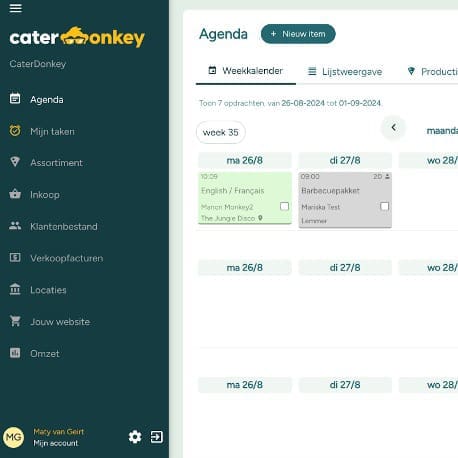
Software such as that offered by Catermonkey can provide valuable support for efficient quotation and price calculation. Our solution automates cost price calculations, monitors your margins and ensures that you don't overlook any costs. This allows you to create professional quotations more quickly and gives you more time for your customers.
Plan your brainstorming session with Catermonkey!
Do you have questions about price calculation or would you like to discover how our platform can support your catering business? Whether you have specific ideas or are simply curious about the possibilities, we are happy to help you! Plan your brainstorming session with Catermonkey! Schedule your no-obligation brainstorming session here and discover how we can optimise your business processes together.
Frequently Asked Questions
How often should I adjust my catering prices to market changes?
Review your prices at least quarterly and when there are significant cost increases (>5%) in ingredients or labor. Keep an eye on your competitors and adjust your rates when your profit margin drops below 20%. Communicate price changes to existing customers in a timely manner.
What should I do if a customer thinks my quote is too expensive?
Explain transparently how you arrived at your price and the value you provide. Offer alternatives such as a simpler menu, less service, or a different location. Never go below your cost price - this undermines your business in the long term.
How do I calculate the right price for a new menu without experience?
Start with a test kitchen to determine exact preparation times and quantities. Add 20% extra time for unfamiliar dishes and test your menu with friends or family. Start with a higher margin (35-40%) until you know the actual costs.
Should I use different prices for different types of customers?
Yes, this is common and sensible. Business clients often pay higher rates than private customers due to complexity and service requirements. Wedding clients accept premium prices for exclusivity. Do keep your pricing structure consistent within each customer category.
How do I prevent forgetting costs for complex events?
Use a standard checklist with all possible cost items and create a detailed plan for each event. Always include a 10-15% buffer for unforeseen costs and document all additional customer requests in writing in your quote.
When should I ask for a deposit and how much should it be?
For assignments over €500, request a deposit of 30-50% when signing the contract. For new customers or large events (>€2000), 50% is common. This covers your purchasing costs and provides financial security in case of cancellations.
How should I deal with price competition from cheaper providers?
Focus on your added value: quality, service, reliability, and experience. Clearly communicate what customers get extra for their money. Do not try to compete on price alone - this leads to a race to the bottom and undermines the entire industry.